
A personal account of small, boring changes that actually worked.

I used to wake up and immediately feel my stomach … press on it, like checking if anything had changed overnight. It never had. But that little ritual set the tone for everything that followed—the skipped breakfast, the coffee on an empty stomach, and the 11 am hunger that made me grab whatever was closest.
That went on for longer than I’d like to admit.
What changed things wasn’t dramatic. No gym membership. No detox program. Just small, almost boring shifts in what I ate and when. And it started, of all places, with breakfast.
Morning—How I Start the Day Without Hating Myself
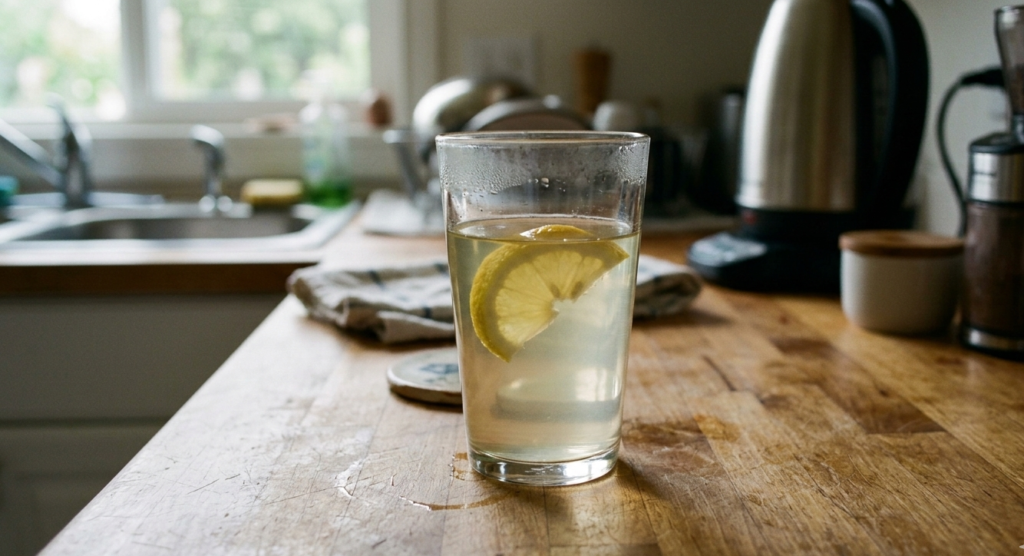
First Thing: Warm Water With Lemon
I know. You’ve heard this one. I rolled my eyes at it too.
I started doing it simply because I needed something to do before reaching for my phone. It became a habit almost by accident. What I noticed—not right away, but over a few weeks—was that my digestion felt less sluggish. I wasn’t bloated by mid-morning the way I used to be. Whether that’s the lemon or just the water, I genuinely can’t tell you. But I kept doing it.
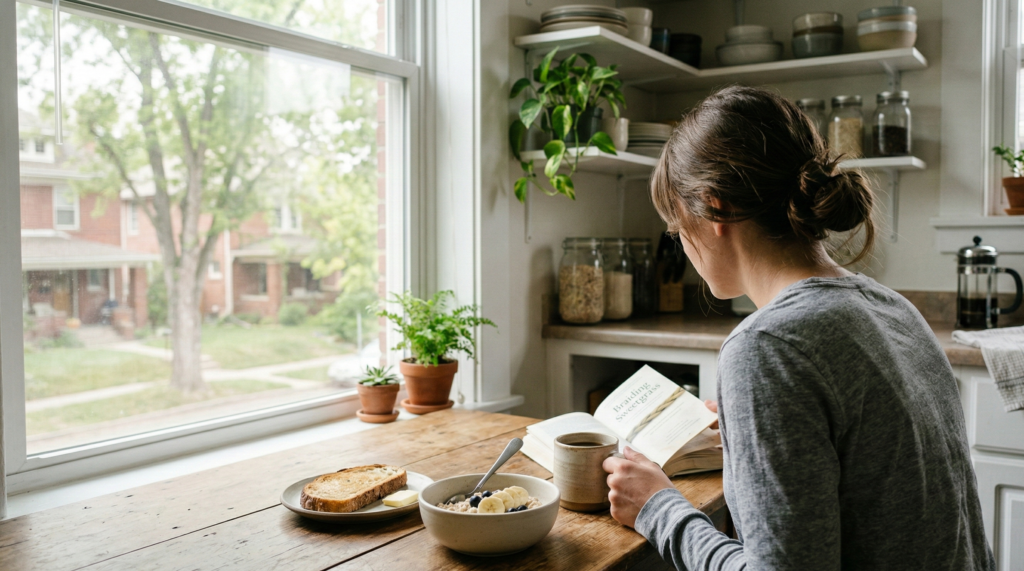
I wait about 20 minutes after that, then eat actual breakfast.
Breakfast: Eggs, and Something Green If I Can Manage It
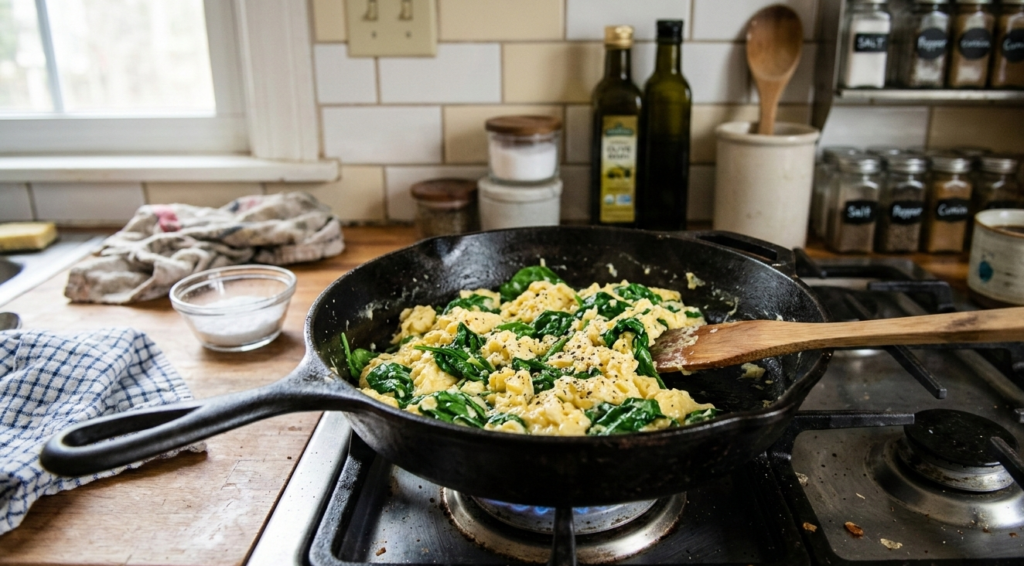
Usually two scrambled eggs, sometimes three. Cooked in a little olive oil because butter left me feeling heavy. I throw in spinach—sometimes fresh, sometimes frozen—microwaving it and just dumping it in. It doesn’t look pretty. It doesn’t taste like a café meal. But it keeps me full until nearly noon, which is the entire point.
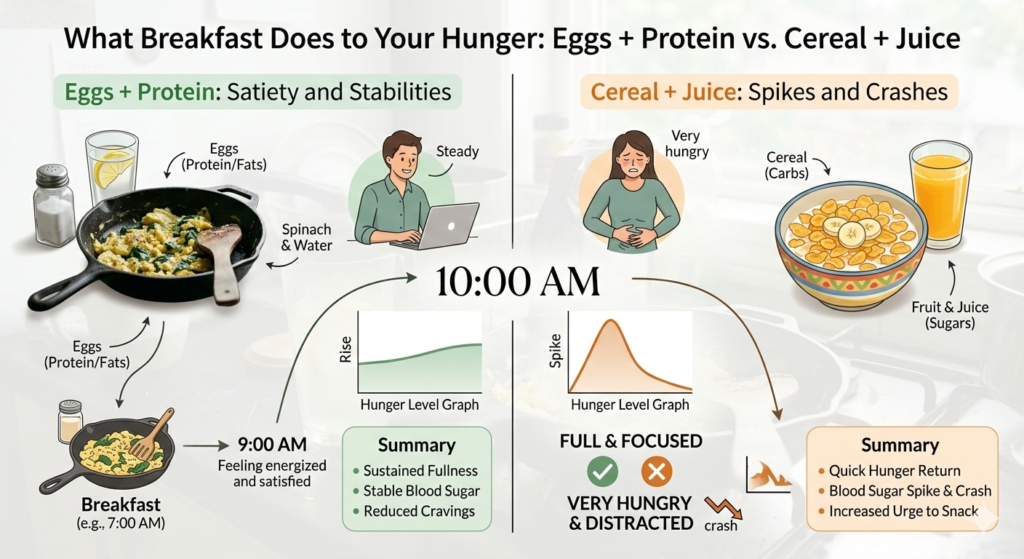
Before this, I was doing the yogurt-and-granola thing. Felt healthy. Looked healthy. I was hungry again in 90 minutes and always, always reached for something sugary after. The eggs fixed that without me even trying to fix it.
Some mornings I add half an avocado. Some mornings I don’t have one. I genuinely don’t stress about it.
What I Stopped Doing in the Morning (That Actually Mattered)
Orange juice was the hard one. I genuinely loved it. But juice—even fresh-squeezed—is basically sugar without the fiber that slows it down. A nutritionist friend told me this at dinner once, and I argued with her. Then I cut it for two weeks, and my 10 am energy crash disappeared. I switched to eating an actual orange instead. Funny how that works.
I also stopped eating cereal. Even the “whole grain” ones with the big health claims on the box. I’d have a bowl, feel fine for 45 minutes, then feel completely hollow. Cereal and I just aren’t compatible anymore.
Why Mornings Matter More Than I Thought
What you eat in the morning quietly shapes what you want for the rest of the day. When I started with protein and fat instead of sugar and carbs, my food decisions later were calmer. Less desperate hunger at lunch. Fewer bread fantasies at 3pm. The cravings didn’t disappear—they just got quieter.
The belly fat didn’t appear overnight. It built up slowly through years of chaotic eating, stress, poor sleep, and genuinely not paying attention. Losing it has been the same—slow, non-linear, kind of boring. But the morning is the foundation. Not because some article said so. Because I felt the difference myself, and that’s the only reason any of it stuck.
Afternoon—The Part of the Day Where Everything Used to Fall Apart
Afternoons were my weak spot for years.
Mornings, I could handle. Structure, routine, and the quiet satisfaction of having eaten a decent breakfast. But somewhere between 1 pm and 4 pm, something would just collapse. The hunger hit differently—not clean and simple like morning hunger, but urgent and emotional and weirdly specific. I didn’t want almonds. I wanted something crunchy and salty or sweet and soft. Comfort food, basically, in the middle of a workday.
And I’d give in. Almost every time.
Lunch: The Meal I Used to Completely Underestimate
For a long time, lunch was whatever was fastest. A sandwich from nearby. Cold leftovers eaten standing at the counter. Sometimes crackers and hummus while answering emails, telling myself that counted. It didn’t. Or it did — just not in the way I needed it to.
Now lunch is simple: a protein, a vegetable, and something filling enough that I don’t want to nap immediately after.
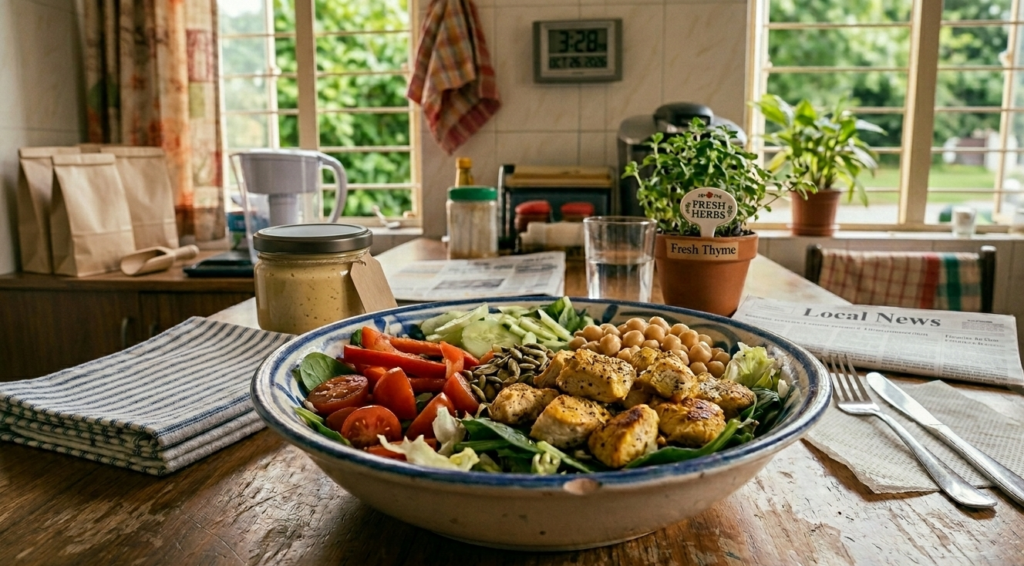
Most often it’s grilled chicken or canned tuna with a proper salad — actual greens, cucumber, cherry tomatoes, chickpeas for bulk, olive oil and lemon as dressing. Sometimes a soft-boiled egg on top. It takes ten minutes and it doesn’t feel like punishment, which matters more than people admit.
Other days it’s rice and vegetables with whatever protein I cooked the night before. I don’t think white rice is the enemy everyone makes it out to be. Portion and context matter more than the rice itself.
The Thing That Changed Lunch More Than the Food Itself
I stopped eating in front of my screen. That was hard—I work from home, and the laptop is always right there. But I kept finishing lunch and barely registering I’d eaten. Twenty minutes later I’d be thinking about food again.
Once I started sitting at the kitchen table, no phone, actually eating—I stayed satisfied noticeably longer. Something about paying attention makes your brain register that you’ve actually had a meal.
The 3pm Situation
This is real, and I think it happens to almost everyone.
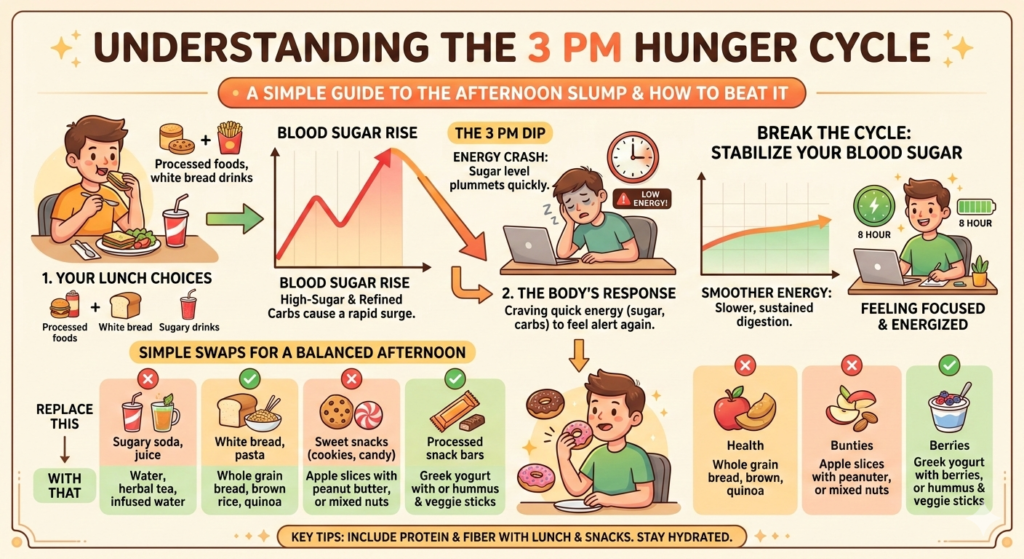
That afternoon dip, where your focus softens and your brain sends very convincing signals that you need sugar. Right now. Urgently.
I used to respond with chocolate, biscuits, or whatever was in the kitchen. Sometimes all three, one after another, while telling myself it was just “a little something.” The little something added up every single day without me tracking it.
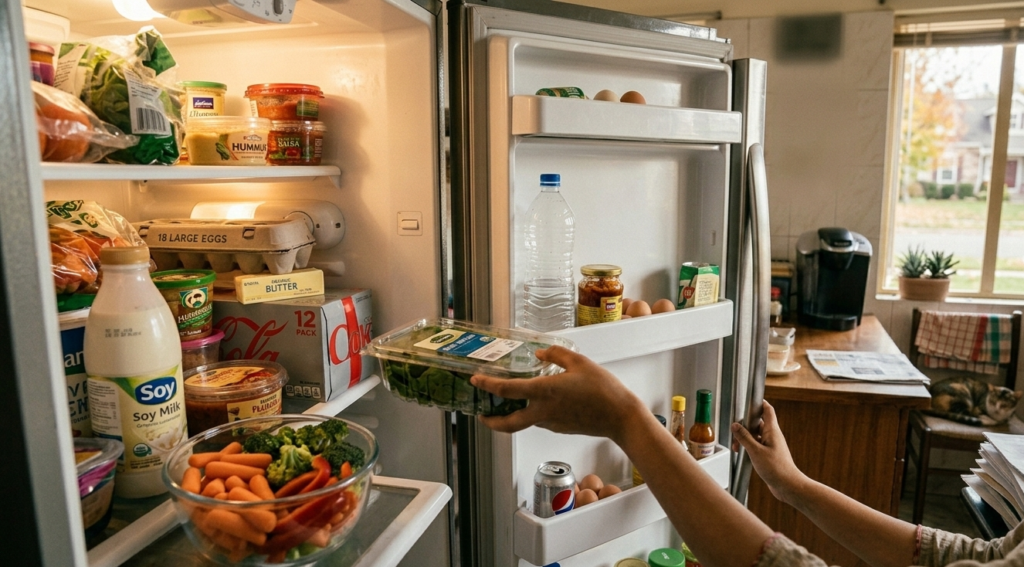
Now I drink water first. Half the time I’m just dehydrated, and my body is confused about what it actually wants. If I’m still genuinely hungry, I’ll have Greek yogurt with no added sugar, a boiled egg, some nuts, or a piece of fruit. Nothing elaborate.
The real shift was having these things already in the fridge. When the 3pm hunger hits and I have to think, I make bad decisions. When there’s a boiled egg already sitting there, I just eat the egg.
What I Drink in the Afternoon
Mostly water. Green tea sometimes—I actually like the taste; that’s the only reason. I stopped having a second coffee in the afternoon about six months ago because it was ruining my sleep, and poor sleep was making me hungrier the next day. I didn’t connect that loop for an embarrassingly long time.
No sugary drinks. That includes the “healthy” ones—bottled smoothies, vitamin waters, and flavored sparkling waters that quietly contain actual sugar. I check labels now, not obsessively, just out of habit. The amount of sugar hidden in things that don’t taste sweet is genuinely surprising.
The Emotional Eating Part—Because It’s Real
A lot of my afternoon eating had nothing to do with hunger. It was boredom, procrastination, low-grade stress, or just needing a break from whatever I was doing. Food was the easiest reset button available.
I’m not completely past this. Some afternoons I still open the fridge and stand there for reasons I can’t honestly justify. But now I notice what I’m doing before I act on it. Sometimes I close the fridge and take a short walk. Sometimes I eat anyway. But the awareness alone has shifted more than any specific food swap.
Belly fat isn’t just about what you eat. It’s about why, and when, and what mood you’re in when you eat it. The afternoons taught me that more than anything else.
Evening—Dinner, the Quiet Habits, and What Actually Changed
Dinner used to be where I overdid everything.
Not because I’m naturally a big eater, but because by evening I’d either under-eaten during the day and was compensating, or I was tired—and tired-me has almost no resistance to food that feels like a reward. Either way, dinner was heavy, late, and usually followed by couch snacking I barely noticed doing.
I didn’t see this as a problem for a long time. Dinner is the big meal, right? That’s how most people grew up. You eat light during the day, and you eat properly at night. Except that logic doesn’t work when you spend the rest of the evening sitting still and then go to sleep.
What Dinner Looks Like Now
I eat earlier. Not aggressively early — not 5pm — but I try to finish by 7:30, 8 at the latest. This was the hardest habit to shift because my body was genuinely trained to expect food at 9pm. Old habits aren’t just mental. They’re physical.
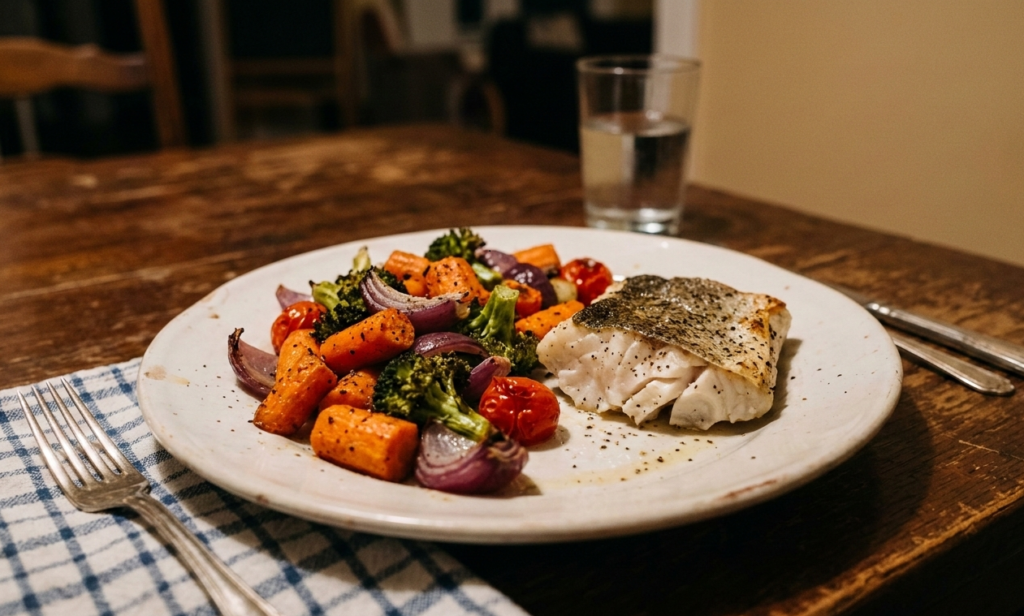
The food is simpler than lunch. Fish fairly often — it’s light and I actually enjoy it. Sometimes chicken. Sometimes just eggs again if I’m not that hungry. Vegetables always, usually roasted because that’s how I’ll actually eat them in decent quantities. A small portion of something starchy if I feel like I need it — sweet potato, lentils, sometimes plain rice.
I stopped making dinner the most elaborate meal of the day. That sounds like a loss. It felt like relief. Less thinking, less cleanup, and somewhere along the way I stopped treating food as a reward after a hard day. That was probably the most quietly significant shift of all of this.
The Soup Thing
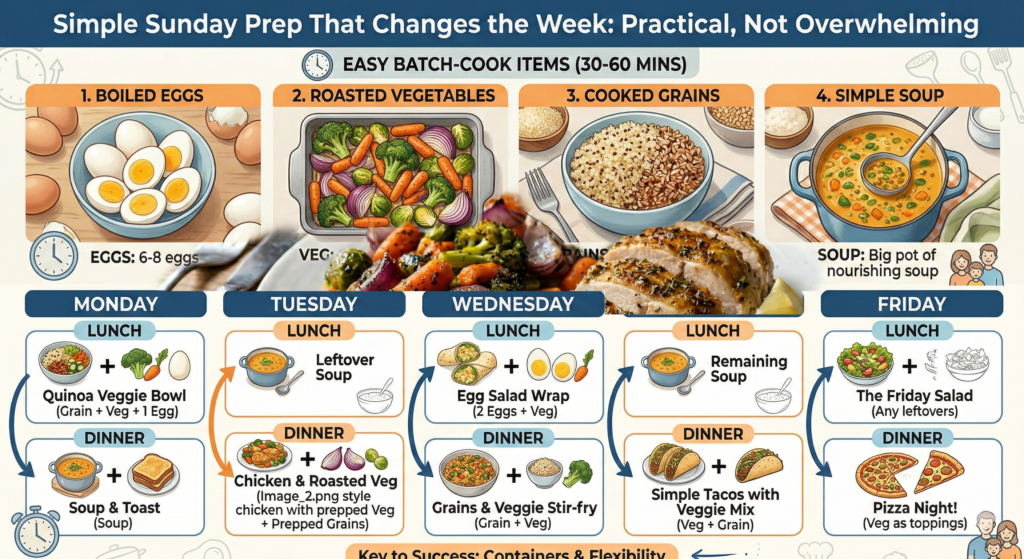
A few months in, I started making a big batch of vegetable soup on Sundays. Nothing special — onion, garlic, whatever vegetables I had, lentils or chickpeas, stock, spices. Blended sometimes, left chunky other times. This became my default dinner on nights when I had no energy to think.
A big bowl, maybe some bread alongside it, and I was satisfied without eating anything heavy.
I mention this not because soup is magical, but because having something already made was. When I was tired and had no plan, I made bad decisions. When there was soup in the fridge, I ate the soup. That’s genuinely it.
Evening Snacking — The Honest Version
I still snack in the evenings sometimes. I’m not going to pretend otherwise.
But the snacks changed. I’m not eating crisps or biscuits mindlessly in front of the TV anymore — mostly because I stopped buying them regularly, which removed the decision entirely. If it’s not in the house, I don’t eat it. That sounds simple. It took me a long time to actually act on it.
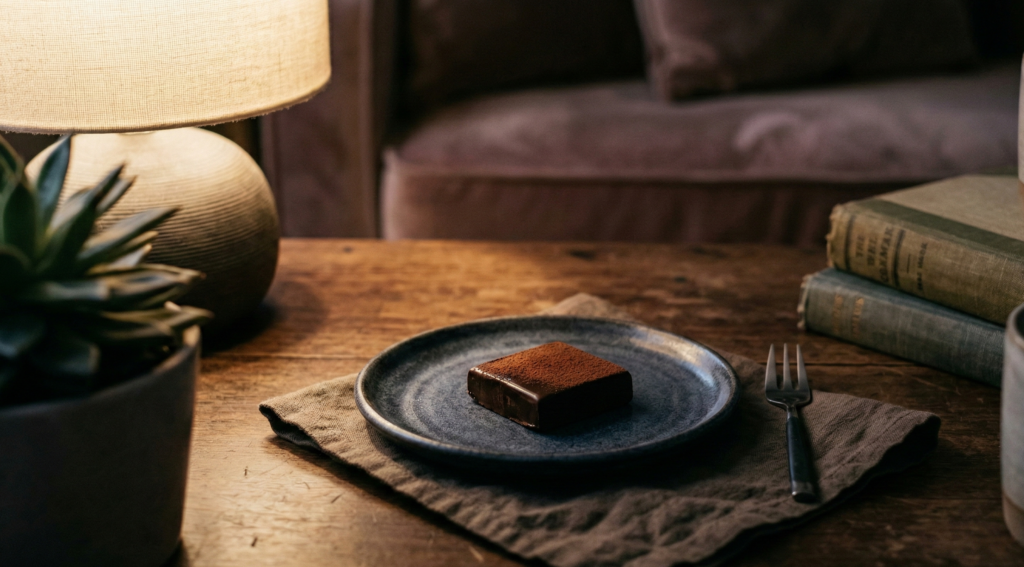
If I genuinely want something after dinner, I’ll have a few squares of dark chocolate — real dark chocolate, the slightly bitter kind you don’t actually want more than a couple of squares of. Or some fruit. Or nothing, because sometimes what feels like evening hunger is just habit, and a glass of water and ten minutes is enough for it to disappear.
Sleep — And Why It Belongs in a Food Article
I know this is about eating. But I can’t honestly talk about belly fat without mentioning sleep, because for me they were completely linked. When I slept badly, I was hungrier the next day. Genuinely, physically hungrier — and specifically for carbs and sugar. I didn’t need to read about why this happens. I lived it every time I had a rough night.
Getting to bed earlier, keeping the room cooler, not eating right before sleep — these things changed how I felt more than almost any specific food choice. My body stopped feeling like it was running on stress and started actually recovering. The belly stuff responded to that too, slowly and quietly.
What Actually Changed — And How Long It Took
The belly fat didn’t disappear. It reduced. Gradually, over several months, in a way I noticed more through how my clothes fit than in any dramatic mirror moment.
There was no day where I looked at myself and felt transformed. It was quieter than that. One morning I realized I’d stopped pressing on my stomach when I woke up. Not because I’d given up caring — but because the low-level anxiety about it had just… settled.
What worked wasn’t a diet with a name. It was eating real food, mostly at sensible times, without punishing myself in between. Protein at breakfast. A proper lunch. A lighter dinner. Less sugar filling the gaps. Water. Sleep. Not perfect execution — just consistent enough, for long enough.
That’s genuinely all of it.
A quick note before you go: this isn’t a plan you follow perfectly. It’s just what one person figured out, slowly, through a lot of trial and error. Take what’s useful, leave what isn’t, and don’t stress about the rest.