

Your Body Has Been Trying to Tell You Something
Here’s something most people never consider: that 3 p.m. energy crash you get every single day? The hair that keeps clogging your shower drain? The muscle cramps that wake you up at night? These aren’t just random annoyances. Your body doesn’t do random. Every symptom is a message — and a lot of the time, that message is: “I’m running low on something I need.”
Vitamin deficiencies are shockingly common in the United States. We live in one of the wealthiest, most food-abundant countries in the world, and yet the CDC has found that millions of Americans are deficient in at least one essential vitamin or mineral. The reasons vary — busy schedules, highly processed diets, time spent indoors, medications that deplete nutrients — but the consequences are real, and they build up quietly over months and years before people finally take notice.
The tricky part? Most deficiency symptoms look like something else entirely. Fatigue looks like burnout. Hair loss looks like stress. Brain fog looks like poor sleep. So people treat the surface problem and never get to the root.
This guide is here to change that. Below are the most important signs of vitamin deficiency that you should never brush off — along with exactly what they mean and what you can do about them.
1. You’re Exhausted No Matter How Much You Sleep
Likely Culprits: Vitamin B12, Vitamin D, Iron
Let’s start with the big one, because this is what brings most people to their doctor in the first place. Fatigue that doesn’t get better with rest is one of the most telling signs of vitamin deficiency — and it’s also one of the most misdiagnosed.
Vitamin B12 is responsible for producing red blood cells, which are how your body delivers oxygen to your tissues and organs. When B12 levels drop, your oxygen delivery suffers. The result? You feel like you’re running on half a tank no matter what you do.
Vitamin D is another major factor here. There’s a reason so many people feel completely wiped out in the winter — it’s not just the cold and the shorter days. Low Vitamin D levels are directly linked to fatigue and low mood, and given that most of us spend our days inside under fluorescent lighting, our D levels are in rough shape. Research estimates that more than 40% of American adults are deficient.
Iron rounds out this trio. Without enough iron, your red blood cells can’t carry oxygen efficiently — leading to anemia and the deep, persistent tiredness that comes with it. Women are especially vulnerable here, particularly during their reproductive years.

2. Your Hair Is Thinning and Your Nails Keep Breaking
Likely Culprits: Biotin (B7), Iron, Zinc, Vitamin D
Some hair loss is completely normal — most people shed between 50 and 100 strands a day. But when you start noticing thinning patches, excessive shedding on your pillow, or nails that crack and peel for no apparent reason, it’s time to dig deeper.
Biotin — also called Vitamin B7 — is the nutrient most people associate with hair and nail health, and for good reason. It’s essential for keratin production, the protein that literally makes up your hair and nails. Low biotin leads to brittle nails and hair that breaks easily and grows slowly.
Iron deficiency cuts off blood supply to the hair follicles. Without adequate blood flow, follicles weaken and eventually stop producing hair altogether. This is one of the leading causes of hair loss in women under 50.
Zinc is less talked about, but equally important. It supports the oil glands that surround your follicles and plays a direct role in hair tissue repair and growth. Low zinc often shows up first as dry, dull hair and white spots on the nails.
Quick self-check: Look at your nails closely. Spoon-shaped or concave nails (called koilonychia) are a classic sign of iron deficiency. Horizontal white lines or bands may point to zinc.
3. Your Bones Ache and Your Muscles Feel Weak
Likely Culprits: Vitamin D, Calcium, Magnesium
Bone pain that doesn’t have an obvious cause — especially in your lower back, hips, or legs — is one of those symptoms that’s easy to blame on “getting older” or “sitting too much.” And while posture and activity level absolutely play a role, chronic, unexplained bone pain deserves a closer look.
Vitamin D is the key to calcium absorption. You can eat all the calcium-rich foods you want, but without sufficient Vitamin D, your body simply can’t absorb it properly. Over time, this leads to a softening and weakening of the bones called osteomalacia — which feels like a persistent, deep aching that’s hard to pin down.
Magnesium often flies under the radar, but it’s doing heavy lifting behind the scenes. It works alongside Vitamin D and calcium to regulate muscle contractions and nerve signals. When magnesium is low, muscles cramp up, twitch involuntarily, and fatigue much faster than they should.

4. You Keep Getting Mouth Sores and Bleeding Gums
Likely Culprits: Vitamin C, B Vitamins (B2, B3, B6), Iron
Your mouth is one of the most revealing places to look for nutritional clues. Certain oral symptoms — ones that keep coming back despite good hygiene — are classic red flags that something is off internally.
Bleeding gums are closely tied to Vitamin C deficiency. Vitamin C is what your body needs to build and maintain collagen, the protein that holds gum tissue together. When levels drop, gums become fragile, swollen, and prone to bleeding. In extreme cases, this progresses to scurvy — which sounds like something out of a history book, but milder forms of Vitamin C deficiency are genuinely more common in America than most people think, especially among those who rarely eat fresh fruit and vegetables.
Cracked, red corners of the mouth — a condition called angular cheilitis — almost always point to a B vitamin deficiency, specifically riboflavin (B2), niacin (B3), or B6. These vitamins are essential for maintaining the skin and mucous membranes.
Recurring canker sores? Those are often linked to low iron, B12, or folate. If you’re getting them regularly, it’s worth getting a blood panel done rather than just reaching for the numbing gel again.
5. Your Night Vision Has Gotten Noticeably Worse
Likely Culprit: Vitamin A
Struggling to see clearly when you walk into a dark room or drive at night? Before you blame screen time or aging, consider Vitamin A.
Vitamin A is a core component of rhodopsin — the light-sensitive protein in your eye’s rod cells that allows you to see in low-light conditions. When Vitamin A levels fall, rhodopsin production drops, and night vision suffers noticeably.
Other eye symptoms associated with Vitamin A deficiency include dry, gritty eyes, increased sensitivity to bright light, and — in more severe cases — a higher risk of serious eye infections.
In the US, severe Vitamin A deficiency is relatively uncommon, but subclinical deficiency (lower-than-optimal levels) is more widespread than most people realize, particularly among those eating mostly processed or fast food with little variety.

6. You Have Persistent Tingling or Numbness in Your Hands and Feet
Likely Culprits: Vitamin B12, Vitamin B6, Vitamin E
Pins and needles that come and go after sitting in an awkward position — totally normal. Tingling or numbness that doesn’t go away, keeps coming back, or gradually spreads — that’s a different story, and it warrants attention.
Vitamin B12 maintains the myelin sheath, which is the protective coating around your nerve fibers. Think of it like the rubber insulation around an electrical wire. When B12 levels are low, that coating starts to deteriorate, and nerve signals get scrambled. The result is numbness, tingling, balance issues, and in more advanced cases, memory problems and difficulty walking.
This is particularly serious because nerve damage from B12 deficiency can become permanent if left untreated for too long. And the people most at risk — vegans, older adults, and those taking certain medications like metformin or proton pump inhibitors — often don’t realize it until symptoms are already progressing.
Vitamin B6 deficiency causes a similar type of peripheral neuropathy, and Vitamin E, which protects nerve cells from oxidative damage, can also contribute to neurological symptoms when it’s low.
7. You Feel Down, Foggy, and Can’t Focus
Likely Culprits: Vitamin D, B12, Folate, Magnesium
The connection between nutrition and mental health is real, clinically supported, and still vastly underappreciated in everyday conversations about wellness.
Vitamin D receptors exist throughout the brain and play a role in regulating mood, motivation, and cognitive function. Low Vitamin D is one of the most consistently observed factors in seasonal depression (SAD), and it’s no coincidence that rates of depression spike in northern states during winter months when sun exposure is minimal.
Folate (Vitamin B9) is required for the production of serotonin and dopamine — the neurotransmitters that regulate mood and motivation. When folate is low, the brain simply doesn’t have the building blocks it needs to maintain emotional balance.
B12 deficiency has been directly linked to brain fog, memory difficulties, poor concentration, and even mood instability, particularly in adults over 50 whose ability to absorb B12 from food naturally declines with age.

8. Wounds and Bruises Take Forever to Heal
Likely Culprits: Vitamin C, Zinc, Vitamin K, Vitamin A
If a small cut is still looking angry a week later, or if you’re bruising from minor bumps that shouldn’t leave a mark, your body’s repair systems may be underfueled.
Wound healing is a complex, multi-step process that requires several key nutrients working in sequence. Vitamin C kicks things off by stimulating collagen production and fighting off infection. Zinc manages inflammation and drives cell regeneration. Vitamin A supports new tissue formation. And Vitamin K regulates blood clotting — without it, even small wounds bleed longer than they should.
A deficiency in any one of these can slow the process significantly. Combined deficiencies — which are more common than people realize in those eating highly restrictive or low-variety diets — can make healing noticeably sluggish.
9. Your Skin Is Constantly Dry, Rough, or Breaking Out in Rashes
Likely Culprits: Vitamin A, Niacin (B3), Biotin, Essential Fatty Acids
When skincare products stop working and nothing seems to help your skin stay clear and hydrated, the issue may be coming from the inside.
Vitamin A deficiency classically causes rough, bumpy skin — particularly on the upper arms and thighs. It looks like tiny raised bumps that never quite go away, a condition known as keratosis pilaris.
Niacin (B3) deficiency leads to a rough, scaly, inflamed rash on skin that gets sun exposure — one of the hallmark signs of pellagra, a condition that’s making a quiet comeback in certain low-income populations with very limited dietary variety.
Biotin deficiency tends to show up as red, scaly patches around the eyes, nose, and mouth. And low levels of essential fatty acids — technically not vitamins, but closely related — result in chronically dry, flaky skin that no moisturizer can fully fix.

10. Heart Palpitations and Unexplained Chest Discomfort
Likely Culprits: Magnesium, Potassium, Thiamine (B1)
Any symptoms involving your heart should be evaluated by a doctor — full stop. But it’s worth knowing that nutritional deficiencies can contribute to heart palpitations, irregular rhythms, and chest discomfort that might otherwise seem mysterious.
Magnesium plays a direct role in regulating the electrical signals that control your heartbeat. Low magnesium can trigger arrhythmias (irregular heartbeats) and is associated with higher blood pressure.
Potassium works alongside magnesium to keep heart muscle contractions steady and rhythmic. A significant drop in potassium — which can happen with poor diet, excessive sweating, or certain medications — can cause palpitations that feel alarming.
Thiamine (Vitamin B1) is essential for cardiovascular function. Severe deficiency, known as beriberi, can cause heart failure. While that level of severity is rare, subclinical thiamine deficiency is increasingly being recognized in people who eat heavily processed, thiamine-stripped diets.
So What Should You Actually Do About It?
If you read through that list and found yourself nodding along to more than one or two symptoms, here’s a clear, practical path forward:
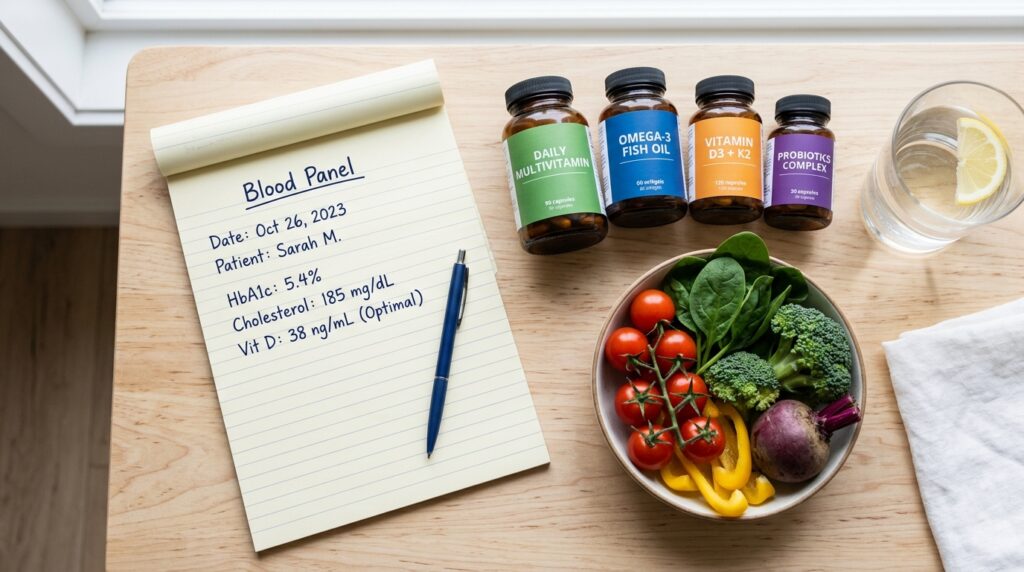
Get tested first. Don’t guess and self-supplement blindly. Ask your doctor for a comprehensive blood panel that checks Vitamin D, B12, folate, iron (including ferritin), magnesium, and zinc. Many of these aren’t included in standard checkups unless you ask.
Look honestly at your diet. Are you eating a variety of whole foods — colorful vegetables, quality protein, healthy fats, whole grains? Or is most of what you eat coming from packages? The two diets produce very different nutritional profiles.
Supplement strategically. If your labs show a deficiency, targeted supplementation can make a significant difference. Look for third-party tested brands certified by USP or NSF International. And always talk to your doctor or a registered dietitian before starting anything new.
Don’t overlook lifestyle factors. Get outside for at least 15–20 minutes of sunlight when you can. Cut back on alcohol, which depletes B vitamins, zinc, and magnesium. And be mindful of medications — many common drugs, including antacids, birth control pills, and metformin, can interfere with nutrient absorption over time.
The Takeaway
Vitamin deficiencies rarely arrive with a dramatic announcement. They sneak in slowly, disguised as ordinary complaints — tiredness, moodiness, dry skin, aching joints. And because we’ve been conditioned to treat symptoms rather than causes, they often go unaddressed for years.
The encouraging news is that most deficiencies, once identified, are highly treatable. A targeted change in diet, some strategic supplementation, and a few lifestyle adjustments can bring your levels back up and genuinely transform how you feel — often within a matter of weeks.
Your body is always communicating with you. These symptoms are worth listening to.
This article is intended for informational purposes only. It is not a substitute for professional medical advice, diagnosis, or treatment. Always consult your physician or a qualified healthcare provider with questions about your health.
Frequently Asked Questions
What is the most common vitamin deficiency in the United States?
Vitamin D tops the list, affecting an estimated 40% of American adults. Vitamin B12 and iron deficiencies are also extremely prevalent, particularly among vegans, older adults, and women of reproductive age.
Can a vitamin deficiency cause anxiety or depression?
Yes. Deficiencies in Vitamin D, B12, folate, and magnesium have all been linked to increased rates of anxiety and depression. This doesn’t mean deficiency is always the cause, but it’s worth ruling out before reaching for other solutions.
How quickly can you recover from a vitamin deficiency?
Mild deficiencies often begin to improve within a few weeks of dietary changes and supplementation. More severe deficiencies — particularly B12 or Vitamin D — can take several months to fully correct, and some nerve-related symptoms may take even longer.
Do symptoms differ between men and women?
The core symptoms are largely the same, but risk factors differ. Women of reproductive age are more prone to iron deficiency due to monthly blood loss. Older men are at higher risk for B12 and Vitamin D deficiency. Pregnant women have significantly elevated needs for folate, iron, and iodine.
Is it possible to get too much of a vitamin through supplements?
Yes — particularly with fat-soluble vitamins like A, D, E, and K, which the body stores rather than excretes. This is another reason to get tested before supplementing heavily, and to stick to recommended doses unless directed otherwise by a doctor.