
Introduction
If you’ve ever wondered whether you should walk or run to lose weight, you’re not alone. It’s one of the most searched fitness questions in the United States. And the answer, honestly, might surprise you. It’s not as simple as “run more, lose more.”
Both walking and running can help you burn fat, improve your health, and hit your weight loss goals — but they work in completely different ways. Your body type, current fitness level, lifestyle, and even your schedule all play a role in which one is the better choice for you.
In this article, I’m going to break down the science in plain English, share real numbers, and help you figure out which approach will actually work for your life — not just for someone who has two hours a day to exercise.
Quick Answer: Running burns more calories per minute. But walking burns a higher percentage of fat per minute — and is far easier to stick to long-term.

The Science of Fat Burning — What Your Body Actually Does
Before comparing the two, it helps to understand how your body burns fat in the first place.
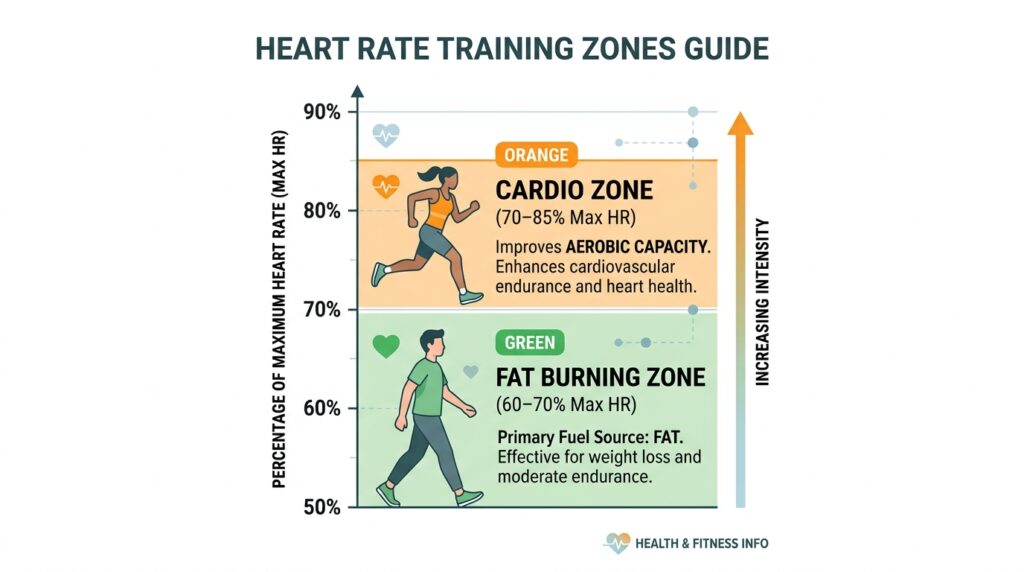
When you exercise at a low to moderate intensity — like a brisk walk — your body relies mainly on fat as its fuel source. This is called the “fat-burning zone.” Your heart rate stays around 60–70% of its maximum, and fat becomes the preferred energy source because your muscles don’t need glucose (sugar) as urgently.
When you exercise at a higher intensity — like running — your body switches to burning more carbohydrates for quick energy. However, after a run, your body continues to burn extra calories for hours through a process called Excess Post-Exercise Oxygen Consumption, or EPOC. Runners call this the “afterburn effect.”
So here’s the key insight: walking burns a higher percentage of fat during the workout itself, while running burns more total calories, including after the workout ends.
Calories Burned: Walking vs Running — The Real Numbers
Let’s talk numbers, because that’s what most people want to know.
For a 155-pound (70 kg) person, here’s what 30 minutes of each activity burns approximately:
- Brisk walking (3.5 mph): ~150 calories
- Running (6 mph / 10-min mile): ~300 calories
- Running (8 mph / 7.5-min mile): ~370 calories
Yes, running burns roughly twice as many calories. But here’s where it gets interesting: if that same person walks for 60 minutes instead of running for 30 minutes, they burn about the same number of calories — and put far less stress on their knees, hips, and joints.
The lesson? Duration matters as much as intensity. If running feels brutal and you quit after 10 minutes, walking for 45 minutes will always win.
| Factor | Walking | Running |
|---|---|---|
| Calories (30 min, 155 lb) | ~150 calories | ~300 calories |
| Fat burn zone | Yes (low intensity) | Post-exercise burn |
| Joint stress | Low | Moderate to High |
| Beginner friendly | Yes | Needs conditioning |
| Afterburn effect (EPOC) | Minimal | Significant |
| Sustainable long-term | Very high | Moderate |
| Injury risk | Low | Higher |
| Mental health benefits | Strong | Very strong |
The Hidden Advantage of Walking Most People Ignore
Here’s something the fitness world doesn’t talk about enough: walking is sustainable in a way that running simply isn’t for most people.
Think about how many times you’ve heard someone say, “I tried running, but my knees gave out,” or “I got shin splints in the first week.” Running has a relatively high injury rate — roughly 30–75% of runners experience some kind of injury each year, according to sports medicine research.
Walking, on the other hand, has almost no injury risk when done at a reasonable pace. You can do it every single day. You can do it in work clothes. You can walk to the grocery store, take a 20-minute lunch break walk, or walk your dog at night. These “invisible workouts” add up to thousands of calories burned per week without you even thinking about it.
This concept is called NEAT — Non-Exercise Activity Thermogenesis. It’s the energy you burn from everyday movement that isn’t structured exercise. For most Americans, NEAT makes up a massive part of daily calorie expenditure, and walking is the easiest way to increase it dramatically.
A person who walks 10,000 steps a day burns roughly 400–500 additional calories — equivalent to a 45-minute run — without ever stepping foot in a gym.

When Running Wins: The Case for Picking Up the Pace
That said, running has real advantages that shouldn’t be ignored.
If your time is limited and you want to burn the maximum number of calories in the shortest amount of time, running wins every time. A 20-minute run can burn more than a 45-minute walk for many people.
Running also builds cardiovascular endurance faster, strengthens the heart more effectively, and triggers a significantly stronger EPOC effect. Studies show that high-intensity running can keep your metabolism elevated for up to 24–48 hours post-exercise.
Running also has powerful mental health benefits. The “runner’s high” — caused by endorphins and endocannabinoids released during hard cardio — is real. Many people find that running relieves stress, anxiety, and even depression in ways that walking simply can’t match at the same intensity.
If you’re already moderately fit and you’re not dealing with joint issues, adding running to your routine can supercharge your weight loss results.
What About Interval Training? The Best of Both Worlds
Here’s a strategy that combines the fat-burning benefits of walking with the calorie-torching power of running: interval training, also known as HIIT (High-Intensity Interval Training).
Walk-run intervals look something like this: walk for 2 minutes at a comfortable pace, then run at a moderate effort for 1 minute, then walk again. Repeat for 20–30 minutes.
This approach lets beginners ease into running without destroying their joints. It also keeps your heart rate fluctuating, which research suggests can increase overall fat burn and metabolic rate better than a steady-paced workout.
Many beginners use the popular Couch to 5K (C25K) program, which is built entirely around walk-run intervals and has helped millions of Americans successfully transition into running over 8–9 weeks.

Which One Is Right for You? A Simple Decision Guide
Here’s a straightforward way to decide which approach fits your situation right now:
Choose walking if:
- You’re just starting your fitness journey
- You have joint pain, knee issues, or are recovering from an injury
- You’re over 50 and looking for a sustainable, daily habit
- You have a busy schedule and want movement woven into your day
- You’ve struggled to stay consistent with intense workouts in the past
Choose running if:
- You’re already moderately fit and want to push harder
- You have limited time and want maximum calorie burn
- You enjoy the mental clarity and endorphin rush of harder cardio
- You’re training for an event like a 5K, 10K, or half marathon
- You’ve been cleared by a doctor for high-impact exercise
Do both (intervals) if:
- You want to transition from walking to running gradually
- You’re looking to break through a weight loss plateau
- You want the fat-burning benefits of walking AND the calorie burn of running
The Real Secret to Weight Loss Nobody Wants to Hear
Here’s the truth: the best exercise for weight loss is the one you’ll actually do consistently.
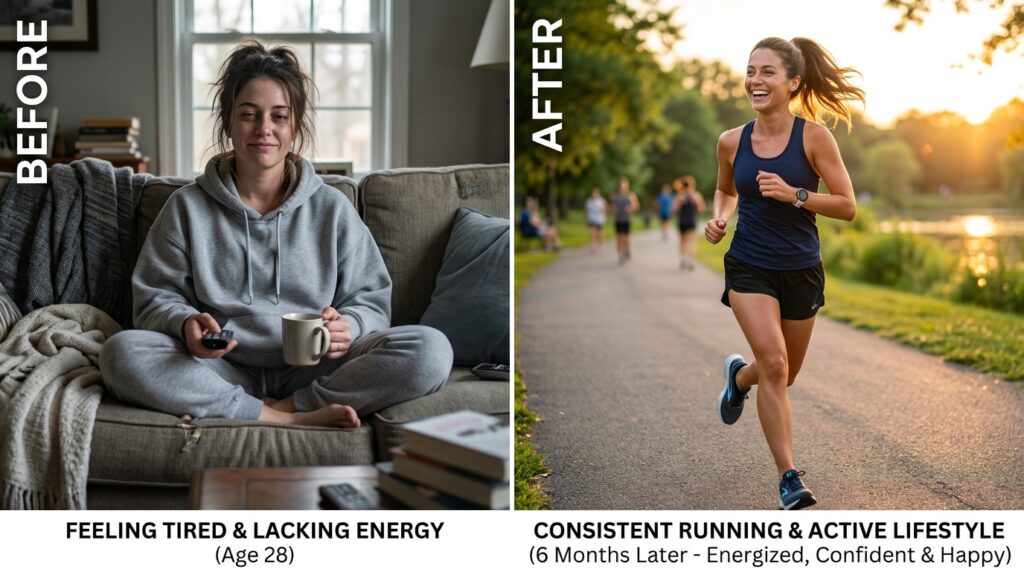
The fitness industry loves to debate whether walking or running is superior. But the people who actually lose weight and keep it off long-term aren’t necessarily the ones doing the most intense workouts. They’re the ones who showed up — day after day, week after week — even when they didn’t feel like it.
A 30-minute walk every single day for a year beats an intense running program that you quit after three weeks. Consistency beats perfection every time.
Pair either activity with a balanced diet — one that’s slightly lower in calories than what you burn — and you will lose weight. It’s not magic. It’s math, combined with showing up.
Studies consistently show that people who exercise regularly, regardless of intensity, maintain weight loss better than those who diet alone. Movement is medicine.
Final Verdict: Walking vs Running for Weight Loss
So, which one burns more fat? Running burns more total calories per minute and has a stronger afterburn effect. Walking burns a higher percentage of fat calories per minute and is dramatically more sustainable, safer, and accessible.
If you want the fastest results and your body can handle it — run (or use intervals). If you want something you can do forever, that fits into your real life and won’t wreck your joints — walk. A lot. Every day.
And if you’re just getting started? Lace up your shoes, head outside, and walk. You don’t need to run a marathon to lose weight. You just need to move — and keep moving.
Your weight loss journey doesn’t have to be painful or extreme. It just has to be consistent.
Did you find this article helpful? Share it with someone who needs to read it.